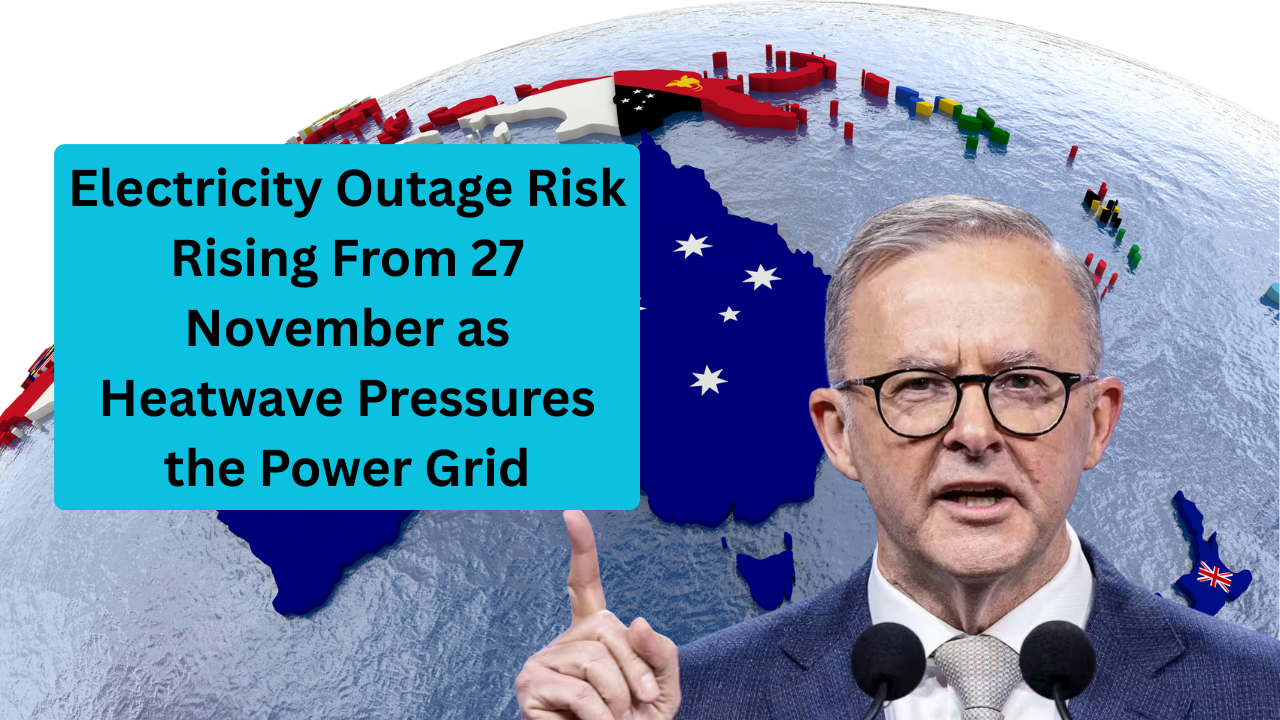
Australia is entering one of its earliest and most intense heatwaves of the season, and officials warn that the resulting pressure on the national power grid could trigger temporary outages across several states. From 27 November, electricity demand is expected to rise sharply as homes and businesses increase cooling usage, while supply remains vulnerable due to planned maintenance, delayed upgrades and reduced output from renewable sources affected by extreme temperatures. Energy authorities say the system is stable for now but concede that risk levels will remain elevated throughout the week.
Power companies have already begun issuing warnings to customers in New South Wales, Victoria, Queensland and South Australia, noting that extreme heat events strain generation and transmission lines simultaneously. In recent years, similar surges have triggered rolling outages and emergency load-shedding in parts of the country. Experts say the combination of ageing coal plants, peak summer usage and variable renewable supply has created a grid that is increasingly sensitive to sudden shocks.
Meteorologists expect temperatures to rise above seasonal averages in most major cities, with inland regions likely to experience consecutive days above 40 degrees. Such conditions put significant stress on infrastructure and accelerate the risk of breakdowns. Officials say the coming days will test how prepared Australia is for the summer peak that typically arrives later in the season.
What Is Driving the Higher Outage Risk
One of the major drivers of the increased outage risk is the combination of extreme heat and scheduled maintenance at several power stations. When demand rises rapidly, even a temporary reduction in generation capacity can ripple across the system. Energy operators have already identified several units in New South Wales and Queensland operating at reduced output due to recent faults and ongoing repairs.
Transmission lines also become less efficient during high heat periods. As temperatures rise, the ability of long-distance lines to carry heavy loads without overheating declines. This frequently limits how much electricity can be transported from states with excess supply to those experiencing shortages. It also increases the likelihood of faults that can trigger wider disruptions.
Renewable energy output is also expected to fluctuate throughout the week. High temperatures typically reduce solar panel efficiency and can cause temporary shutdowns if systems overheat. Wind output is projected to be lower than usual in some regions due to shifting weather patterns. This is a significant factor because renewables now account for a growing share of national generation, and variability can create sudden gaps in supply during peak demand.
Experts say the combination of these factors has created a stress point that energy authorities must monitor closely. While backup reserves are available, operators warn that extended or repeated heatwaves could stretch the system beyond its short-term capacity.
How Households May Be Affected
For most households, the increased outage risk will not necessarily translate into long blackouts. Instead, authorities may use targeted interventions to maintain stability. This can include brief supply reductions in specific suburbs or regions, often lasting only minutes. These controlled interruptions are designed to prevent larger system failures that would take longer to restore.
Energy companies are particularly concerned about late afternoon and early evening spikes in demand. This is the period when solar energy begins to taper off but air conditioning use remains high. If supply gaps emerge, authorities may activate demand-response measures that ask large commercial users to temporarily reduce consumption. In extreme cases, residential areas may be included.
Households using medical equipment that requires constant power are encouraged to review their backup plans and ensure alternative arrangements are available. Officials say the number of affected residents should be small but emphasise that preparation is essential during high-risk periods.
Home appliances such as air conditioners, refrigerators and cooling systems may experience strain during prolonged high-use periods. Experts recommend avoiding setting air conditioning temperatures below the mid 20s, as this reduces load and helps stabilise the grid. Even slight adjustments can collectively ease pressure on the system.

Regions Most at Risk of Power Interruptions
While every state is experiencing elevated demand, some regions face higher levels of risk due to limited local generation capacity or ageing infrastructure. New South Wales is seen as the most vulnerable due to ongoing repairs at major coal units and heavy summer consumption across Sydney and surrounding areas. Victoria may also face pressure, especially if high temperatures persist over consecutive days and if renewable output declines during peak hours.
Queensland, which typically maintains strong generation capacity, may still face challenges in inland regions prone to extreme heat levels. South Australia relies heavily on wind and solar generation, making it sensitive to renewable fluctuations. The state’s interconnections with Victoria provide stability, but transmission limits can create temporary vulnerabilities during heatwaves.
Western Australia’s grid operates separately from the eastern states, and early summer heat has already pushed demand higher than average. Authorities there say they are prepared for the week ahead but caution that localised outages may occur if equipment failures coincide with high consumption periods.
Regional communities and rural towns often face higher outage risks due to long-distance transmission lines that are more susceptible to heat-related faults. These areas may experience short disruptions as power companies try to maintain stability across wider networks.
Measures Being Taken by Governments and Power Companies
Federal and state authorities say they are prepared for the heatwave and have activated summer readiness plans earlier than usual. Power stations have been instructed to delay non-essential maintenance and keep additional units on standby. Emergency reserve contracts with industry users have also been activated, allowing operators to reduce consumption if needed to stabilise the grid.
Energy companies are conducting round-the-clock monitoring of transmission lines to identify potential faults before they escalate. They are also coordinating with weather agencies to anticipate high-risk periods. In some states, mobile generation units have been placed on standby to support local networks if supply gaps appear.
Governments are also reviewing the role of large-scale batteries, which have become crucial in absorbing excess renewable generation and releasing it during peak periods. While battery capacity is expanding rapidly across the country, experts say further investment is essential to reduce reliance on ageing coal infrastructure.
Long-term planning efforts focus on modernising the grid, improving storage, expanding transmission lines and increasing the reliability of renewable assets. Authorities say the current situation underlines how essential these upgrades are, especially as climate patterns shift and extreme weather events become more common.
What Households Can Do During the High-Risk Period
Energy authorities say small changes by households can collectively make a meaningful difference in reducing pressure on the grid. Simple steps such as adjusting air conditioning settings, turning off unused appliances and avoiding heavy appliance use during peak periods can help stabilise supply. Running washing machines or dishwashers during the day, when solar output is high, is also recommended.
Residents are also encouraged to keep curtains closed during the hottest hours to reduce indoor temperatures and lessen reliance on cooling systems. Those living in older homes or poorly insulated buildings may find that fans combined with moderate air conditioning settings provide more efficient cooling.
Households should also prepare for the possibility of short outages by keeping essential devices charged and ensuring they have access to torches, water and backup power sources if required. Officials emphasise that while the risk of extended blackouts remains low, readiness is always advisable during extreme weather events.


Hi, I’m Isla. I cover government aid programs and policy updates, focusing on how new initiatives and regulations impact everyday people. I’m passionate about making complex policy changes easier to understand and helping readers stay informed about the latest developments in public support and social welfare. Through my work, I aim to bridge the gap between government action and community awareness.









Leave a Comment